
WOODTURNING
Our woodturning tools
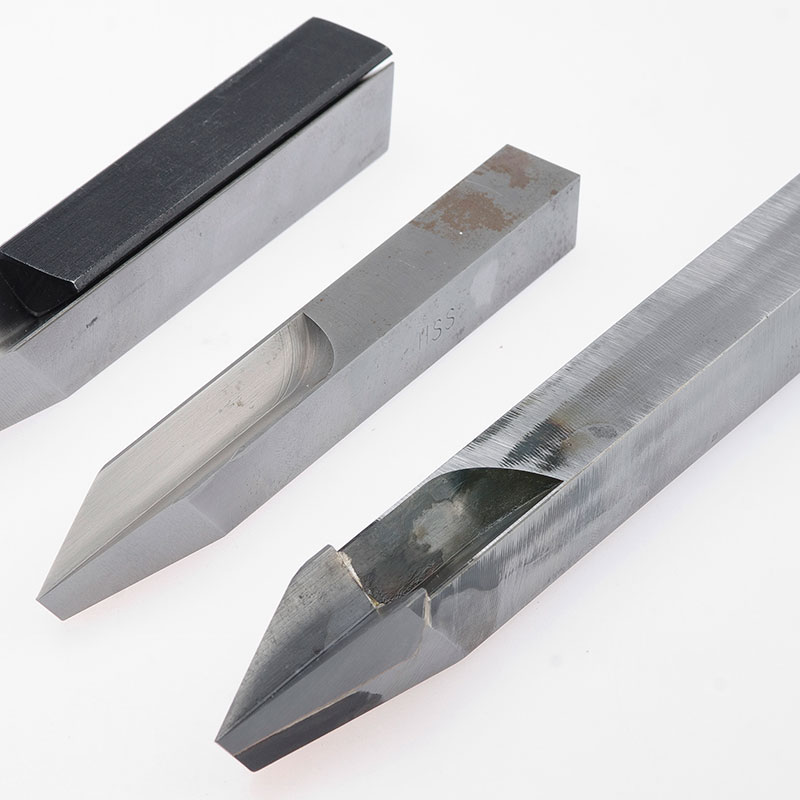
Pointed cutters
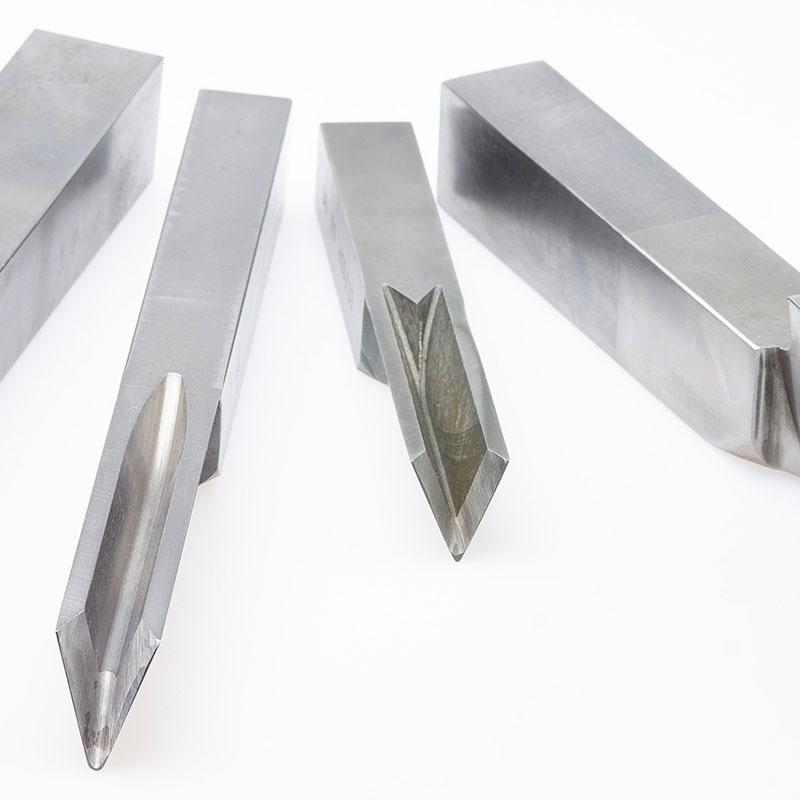
Copying gouges
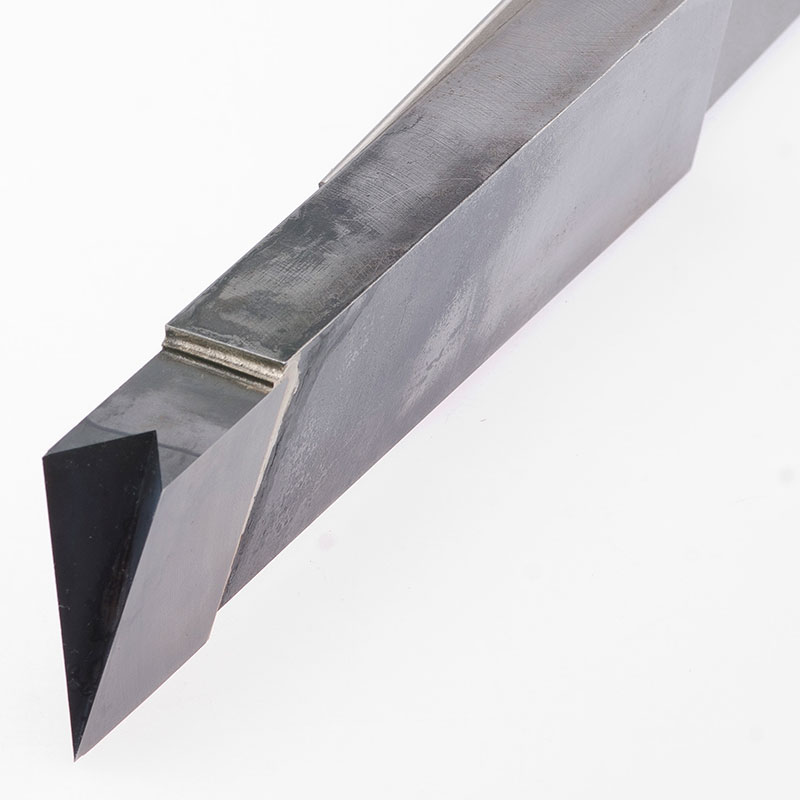
Vertical Cutters
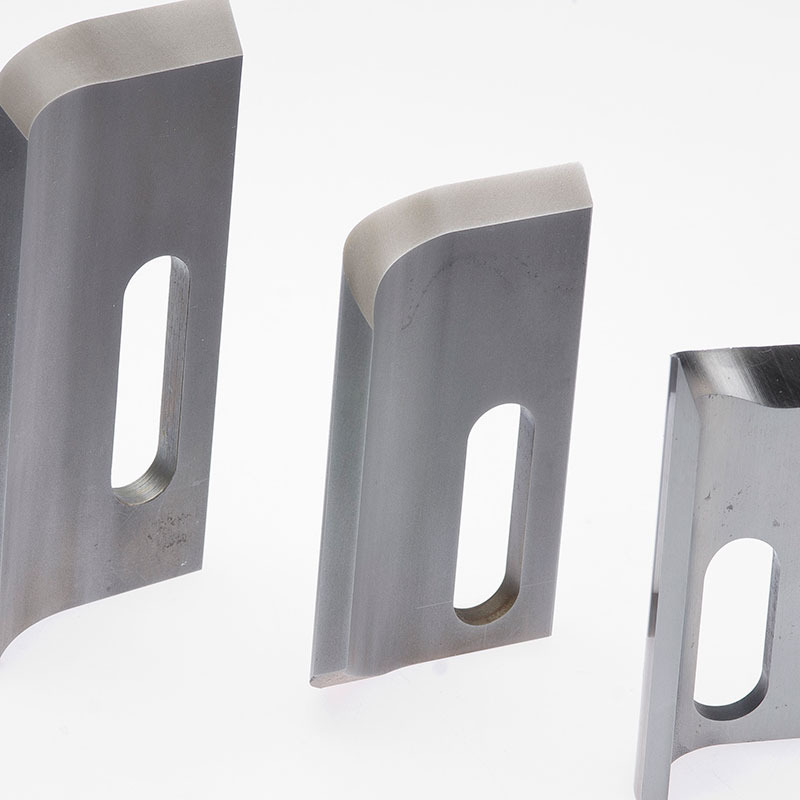
Cutters for Tools Handles
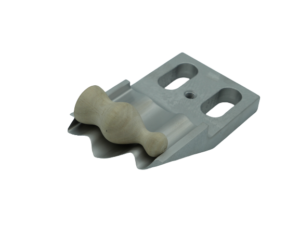
Form tool
What is woodturning?
Woodturning enables to make cylindrical parts (cylinder, spherical part, ellipse...) by removing material thanks to a lathe. With woodturning, the wooden part undergoes a rotation and it is shaped thanks to cutting tools. Compared to milling (the cutting tool rotates), woodturning enables to obtain higher performances but limits the shapes obtained to cylindrical parts.
Woodturning was invented 1300 years BC: at this time, the Egyptians used a rope for woodturning. In the Middle Ages, the manual rotation was replaced by the handling of a pedal, thus freeing both hands of the craftsman. More recently, the motorisation has enabled to increase the rotation speeds, thereby substantially improving the performances and the quality of the parts.
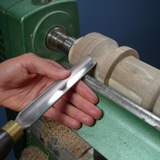
The tools to use for woodturning
3 kinds of tools can be used for woodturning:
- Gouges
- Form tools
- Pointed cutters
The gouges are used mainly by craftsmen who make unit parts. They shape the form by holding the gouge in their hand.
Form tools are used for small or serial productions. The form tools enable to carve the form directly.
With pointed cutters, it's possible to rough wooden parts completely using a copier.
Types of lathes
There are different copy lathes:
- Traditional copy lathe → manual machining
- Semi-automatic or automatic copy lathe → machining for serial production
- Numerical control copy lathe (CNC) → machining for serial production
The classical copy lathe has a headstock and a tailstock which enables to fix the wooden part properly. The machining of wooden parts is done manually with hand gouges, the wood is shaped in an artisanal way.
The semi-automatic and automatic copy lathe have a headstock, a tailstock and also tool holders. The machining is not manual. The tools used are copying tools which are used with a copier. The latter is usually located at the back of the lathe which follows an indicated model, allowing to reproduce several identical parts. If you don't have a copier, it's possible to use form tools to reproduce similar parts.
The CNC wood turning lathe has a headstock with a tailstock and generally 4 or 5 tool trays. The only difference is that everything is managed electronically. You simply need to program the machine to produce identical parts in series.
The advantages of semi-automatic, automatic and CNC wood lathes are execution speed, repeatability and safety. Indeed, the chip removal capacity is greater on this type of machine, it is quite possible to produce 3000 or even 4000 parts in a row in just a few hours. Unlike the classical wood lathe where the regularity of parts is never the same since the work is done by hand, it is difficult to produce parts with the same dimensions. In addition, non-manual lathes guarantee better safety for the user, there is little risk of chip projection at eye level for example but also cuts because the turner is not in contact with the tools during machine operation.
The tools made by LUSSAULT for woodturning
Since 1865, LUSSAULT has made more than 15,000 tools for semi-automatic, automatic and numerical control copy lathes. The steels and the heat treatments used by LUSSAULT have been chosen to offer the best quality available nowadays.
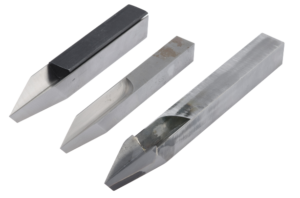
Pointed cutters
The pointed cutters are used only with a copier. The tools have several functions: roughing and finishing. Roughing means removing the maximum amount of material as quickly as possible, before doing the finishing more meticulously.
The standard dimensions of the pointed cutters are 20×20 with a total length of 200mm or 16×16 with a total length of 180mm. But the dimensions can vary depending on the machine capacity, the tool holder dimensions and the machine brand. LUSSAULT has chosen to offer custom-made tools according to your exact needs.
Cutters for Tools Handles
Cutters for tools handles are specific to rotary head lathes for the manufacture of all types of tool handles such as shovels, picks, rakes, etc.
The dimensions of tool handles are linked to the machine brand. We regularly manufacture for the brands LATOUR, SIBO, TAUS, BRUSA and BACCI but we can provide you with tools for any brand.
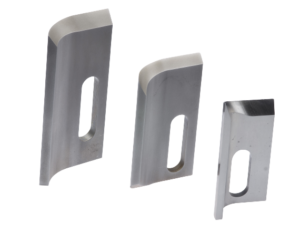
Vertical cutters
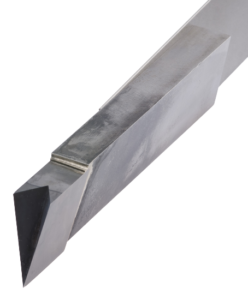
The vertical cutters have the same functionality as the pointed copying cutters, i.e. roughing and finishing, and are also used with a copier. However, the tool holder is different, it is specific to vertical cutters and is generally triangular in shape.
With vertical cutters, you can make parts of revolution (the revolution is the movement of an object around an axis, so it is 360° work). You can also make chair legs, balustrade bars, stakes or even larger parts up to 1.5m long and 80cm in diameter.
Copying gouges
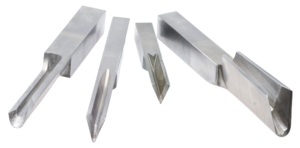
The copying gouges are V and J shaped, which allows cutting the wood following the shape of a model. Like the pointed copying cutters, the copying gouges are roughing and finishing tools.
Form tools
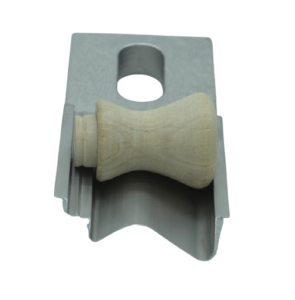
Form tools are created on customer request, since they are unique and meet your needs. The advantage of these tools is that it is possible to create complex shapes without copying means, meaning you don't need a copier to use the tools. Furthermore, with a single form tool you can make multiple wooden parts.
Steels
LUSSAULT has selected several steels:
- HSS
- HSS/CO
- TANTUNG
HSS is a high speed steel which can be used for all kinds of wood. At LUSSAULT, these steels benefit from a superior quality hardening to maintain their quality at high speed and high temperature. HSS is generally recommended for small batches.
HSS/CO is a high speed steel alloyed with Cobalt (8% at LUSSAULT which is quite exceptional). This type of steel is recommended for medium and large batches because it has very good cutting acuity and increased cutting longevity compared to HSS.
TANTUNG is a particular material containing 40 to 50% Cobalt, this steel is specific to pointed cutters and vertical cutters. Due to its composition, TANTUNG is more efficient than HSS/CO, it is recommended for large batches because the steel wears less quickly, allowing to space out the time between 2 sharpenings.
The advantage of our steels is that they are core treated, which means that unlike a classic coating where the steel is only treated on the surface, our steels have the same rigidity and the same mass on the surface and inside.
Sharpening service
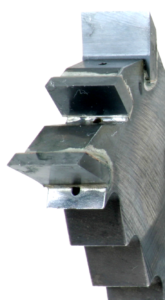
Sharpening is crucial for the proper functioning of tools. A quality sharpening allows to increase the spacing between two sharpenings, improves the finish quality and prevents the tool from overheating.
The sharpening intensity is linked to the type of wood, the frequency of use of the tools and the type of steel used.
LUSSAULT ensures complete sharpening of all tools, which guarantees that the initial cutting angles are respected.
The brands of machines
The standard machines are:
We can study on request all types of tools thanks to a dimensioned plan.
For any request: contact@lussault.fr ou +33 2 51 61 16 25